
If your radiators are not heating evenly or you notice cold spots, trapped air inside the system may be the cause. Bleeding your radiators releases this trapped air, allowing hot water to circulate properly and helping your heating system run more efficiently. The process is simple and can usually be completed in just a few minutes.
Below is a step-by-step guide to help you bleed your radiators safely.
1. Get the Right Tools Ready
Before you begin, make sure you have a radiator key, which is used to open the bleed valve on the radiator. These are inexpensive and available at most hardware stores.
It’s also a good idea to have a cloth, rag, or small container ready to catch any water that may drip out during the process.
2. Find the Bleed Valve
Look for the bleed valve at the top of your radiator, usually located on one of the sides. The valve is typically small and circular, with a square fitting in the centre where the radiator key fits. Some radiators may have a small screw instead.
3. Turn Off the Heating
Before opening any valves, switch off your heating system. You can do this by turning down the thermostat or turning off the boiler. This prevents hot water from circulating while you bleed the radiator and helps avoid burns.
4. Release the Trapped Air
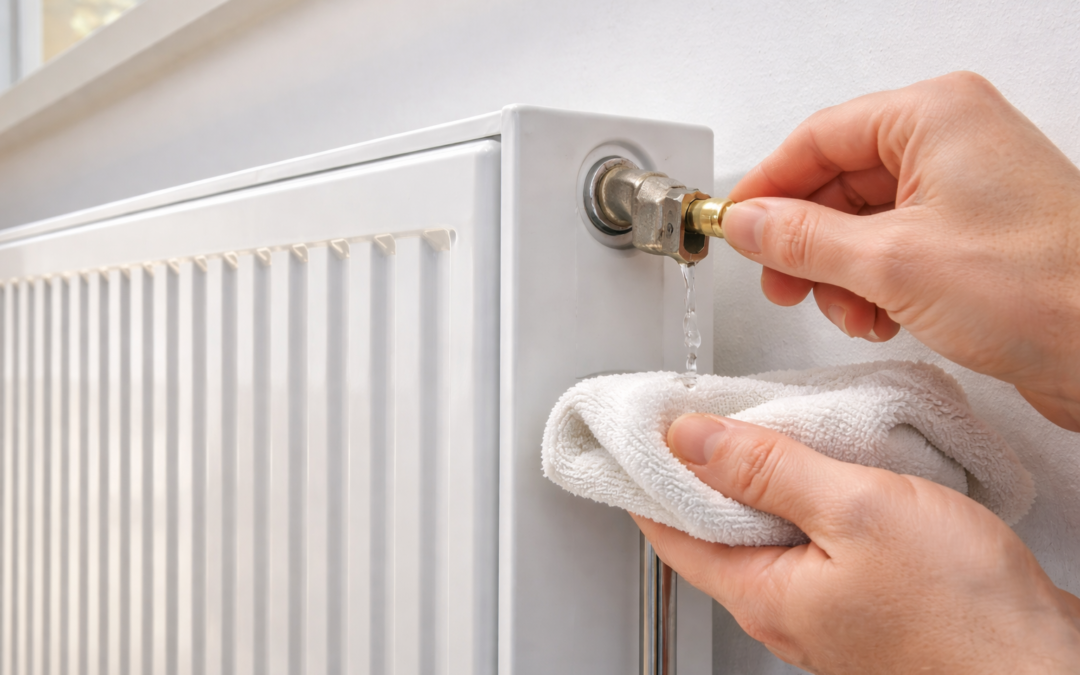
Insert the radiator key into the bleed valve and slowly turn it anticlockwise. As the valve opens, you will hear a hissing sound, which is the trapped air escaping.
Keep the valve slightly open until the hissing stops and water begins to come out.
5. Catch Any Drips
Hold your cloth or rag under the valve while the air escapes. Once the water starts to flow steadily, it means the air has been released and the radiator is full of water again.
6. Close the Valve
Turn the radiator key clockwise to close the valve. Make sure it is secure, but avoid tightening it too much, as this could damage the valve.
7. Repeat for Other Radiators
Go through the same process for any other radiators in your home that may contain trapped air. Bleeding radiators is particularly helpful if your heating hasn’t been used for a while or if some radiators are warm at the bottom but cold at the top.
Final Thoughts
Bleeding your radiators is a simple maintenance task that can significantly improve your heating system’s performance. By removing trapped air, your radiators will heat more evenly and your home will stay warmer and more comfortable.
If you’re unsure about the process or continue to experience heating problems, it’s always best to contact a qualified heating engineer for assistance.